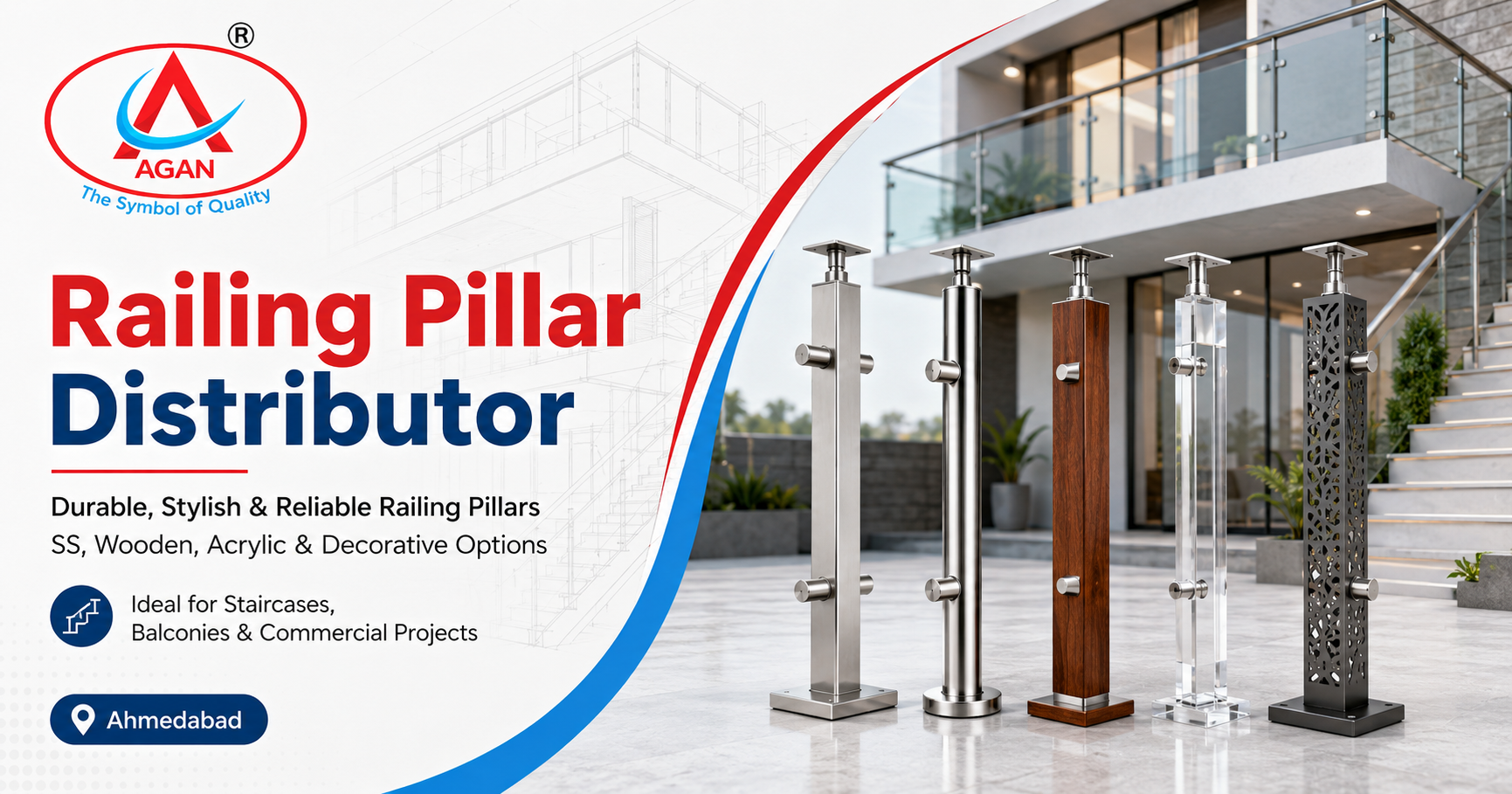
Railing Pillar Distributor
Expert railing pillar distribution in Ahmedabad. Find durable, stylish pillars for your construction needs from Agan Industries.
What are Railing Pillars? An Overview
Railing pillars, also known as balusters or newel posts, are vertical components that form the core support structure of a railing system. They are typically installed at regular intervals along a staircase, balcony, or deck, connecting the handrail to the base. These pillars not only provide essential structural support to prevent falls but also contribute significantly to the overall visual design of the railing. They come in a wide array of materials, including stainless steel, wood, acrylic, and composite, each offering unique aesthetic and performance characteristics.
Key Features and Technical Specifications
When selecting railing pillars, several technical aspects are crucial for ensuring suitability and longevity. These features dictate the pillar's strength, durability, and aesthetic integration into your project.
- Material Composition: Options range from high-grade stainless steel (e.g., SS 304, SS 316) for corrosion resistance to various hardwoods like teak or oak, and modern acrylics or composites.
- Dimensions and Size: Pillars are available in standard sizes (e.g., 4-inch diameter, specific heights) but can often be customized to fit project-specific requirements.
- Load-Bearing Capacity: The structural integrity of the pillar must be sufficient to withstand anticipated loads, especially in public or high-traffic areas.
- Finish and Texture: Finishes can vary from polished, brushed, or matte stainless steel to natural wood grains, painted surfaces, or decorative patterns.
- Connection Type: The method by which the pillar attaches to the base and supports the handrail (e.g., top-mount, side-mount, threaded rod) is critical for stability.
- Design Aesthetics: Pillars can be simple and minimalist, ornate and decorative, or incorporate unique elements like laser-cut patterns or integrated lighting.
- Weather Resistance: For exterior applications, materials and finishes must be chosen for their ability to withstand environmental factors like UV exposure, moisture, and temperature fluctuations.
- Weight and Portability: The weight of the pillar can influence installation ease and structural requirements for the base it's mounted on.
Industrial Applications and Use Cases
Railing pillars are integral to a wide range of construction and design projects, serving both functional and decorative purposes across various sectors.
- Residential Staircases: Providing essential support and aesthetic enhancement for indoor and outdoor staircases in homes.
- Balcony and Deck Railings: Ensuring safety and style for elevated outdoor living spaces in apartments, houses, and commercial buildings.
- Commercial Building Entrances: Creating an impressive and secure entryway for offices, retail spaces, and public facilities.
- Shopping Malls and Atriums: Offering durable and visually appealing railing solutions for high-traffic public areas.
- Hotels and Hospitality Venues: Enhancing the luxurious ambiance of lobbies, corridors, and guest areas.
- Public Spaces and Parks: Providing safe and robust railing systems for walkways, bridges, and viewing platforms.
- Theaters and Auditoriums: Integrating seamlessly with interior design to provide safe passage and enhance acoustics.
- Corporate Offices: Adding a touch of sophistication and professionalism to office interiors and exteriors.
How to Choose the Right Railing Pillar
Selecting the appropriate railing pillar involves careful consideration of several factors to ensure it meets your project's specific needs for safety, durability, and aesthetics.
- Project Type and Location: Determine if the railing is for interior or exterior use, residential or commercial, and consider the local climate and environmental conditions.
- Material Suitability: Match the material (stainless steel, wood, acrylic) to the required durability, maintenance level, and desired visual style.
- Structural Requirements: Assess the necessary load-bearing capacity based on building codes and expected usage to ensure safety.
- Design Cohesion: Choose pillars that complement the overall architectural style and interior design of the space.
- Installation Method: Understand how the pillars will be mounted and ensure compatibility with your flooring or base structure.
- Supplier Reputation and Experience: Opt for a distributor with a proven track record in providing quality products and reliable service.
- Customization Options: If standard sizes or designs aren't suitable, look for a supplier who offers custom manufacturing services.
- Budgetary Constraints: Balance the cost of materials and design with the long-term value and durability offered by different options.
Quality Standards and Compliance
Ensuring that railing pillars meet established quality standards and compliance regulations is critical for safety and longevity. In India, various standards are relevant, and reputable manufacturers and distributors adhere to them. For stainless steel components, standards like those set by the Bureau of Indian Standards (BIS) or international bodies like ISO are often referenced. These standards typically cover material composition, mechanical properties, and manufacturing processes to guarantee performance.
When sourcing railing pillars, it's advisable to inquire about certifications or compliance with relevant Indian Standards (IS) or international equivalents. A distributor committed to quality will be transparent about the materials used and the standards their products meet. This verification process helps ensure that the pillars you select are not only aesthetically pleasing but also structurally sound and safe for their intended application, providing peace of mind for builders and end-users alike.
Why Agan Industries' Experience and Capability Matters
Established in 2016, Agan Industries & Trading Private Limited has built a strong foundation as a manufacturer and exporter of railing pillars and related components. Our experience in the industry, particularly serving the Ahmedabad region, allows us to understand the specific demands of local construction projects. We focus on robust manufacturing processes that ensure the durability and structural integrity of every product.
Our technical capability extends to offering a diverse range of materials, including premium stainless steel, elegant wood, and modern acrylics, often combined with innovative designs. We pride ourselves on our quality control measures, ensuring that each pillar meets stringent standards before it reaches our clients. Furthermore, our ability to provide custom manufacturing solutions means we can tailor pillars to unique project specifications, ensuring a perfect fit and desired aesthetic. This commitment to quality, customization, and client satisfaction positions us as a reliable partner for your railing needs.
Installation, Maintenance, and Care Tips
Proper installation and regular maintenance are key to maximizing the lifespan and appearance of your railing pillars. For installation, ensure that pillars are securely anchored to a solid base, whether it's concrete, wood, or metal. Follow the manufacturer's recommended fastening methods and use appropriate hardware. For exterior installations, consider the potential for expansion and contraction due to temperature changes.
Maintenance varies by material. Stainless steel pillars generally require minimal upkeep; a regular wipe-down with a soft cloth and mild detergent is usually sufficient to maintain their shine and prevent surface contamination. Avoid abrasive cleaners that can scratch the finish. Wooden pillars, especially for outdoor use, will benefit from periodic sealing or varnishing to protect them from moisture, UV rays, and pests. Acrylic pillars can be cleaned with a soft cloth and non-abrasive cleaners; avoid harsh chemicals that could cloud the material.
Frequently Asked Questions
A railing pillar, also known as a baluster or newel post, serves as a vertical support element within a railing system. Its main function is to provide structural integrity, connecting the handrail to the base and ensuring the safety of the railing by preventing falls. They also play a significant role in the overall aesthetic design of the railing and the surrounding space.
Common materials include stainless steel, known for its strength and corrosion resistance; various types of wood, offering a classic and warm aesthetic; acrylic, providing a modern and translucent look; and composite materials, which combine durability with low maintenance. The choice of material often depends on the desired style, budget, and environmental exposure.
The correct size and spacing are typically dictated by local building codes and safety regulations, which specify maximum allowable gaps between pillars and minimum load-bearing requirements. It's essential to consult these codes and consider the overall design of the railing system, ensuring both safety and visual balance.
Yes, many manufacturers and distributors offer custom design and manufacturing services. This allows for pillars to be created in specific dimensions, styles, finishes, or with unique decorative elements to perfectly match a project's architectural requirements and aesthetic vision.
While often used interchangeably, "railing pillar" can be a broader term. A "baluster" specifically refers to the smaller, often decorative vertical spindles that fill the space between the handrail and the base. A "newel post" is typically a larger, more substantial pillar found at the beginning or end of a railing run, providing primary structural support.
To maintain stainless steel pillars, regularly clean them with a soft cloth and a mild soap or specialized stainless steel cleaner. Rinse thoroughly and dry with a clean, soft cloth to prevent water spots. Avoid using abrasive pads, steel wool, or harsh chemicals, as these can scratch the surface or damage the protective layer.
Conclusion
For any construction or renovation project in Ahmedabad, selecting the right railing pillar distributor is a decision that impacts both the safety and the aesthetic appeal of the final structure. A reliable distributor ensures access to a wide range of high-quality materials, designs, and specifications, backed by technical expertise and a commitment to compliance. By carefully considering material properties, structural requirements, design integration, and supplier experience, you can secure railing pillars that not only meet but exceed expectations, contributing to the lasting beauty and integrity of your project.
Get In Touch
Agan Industries & Trading Private Limited
